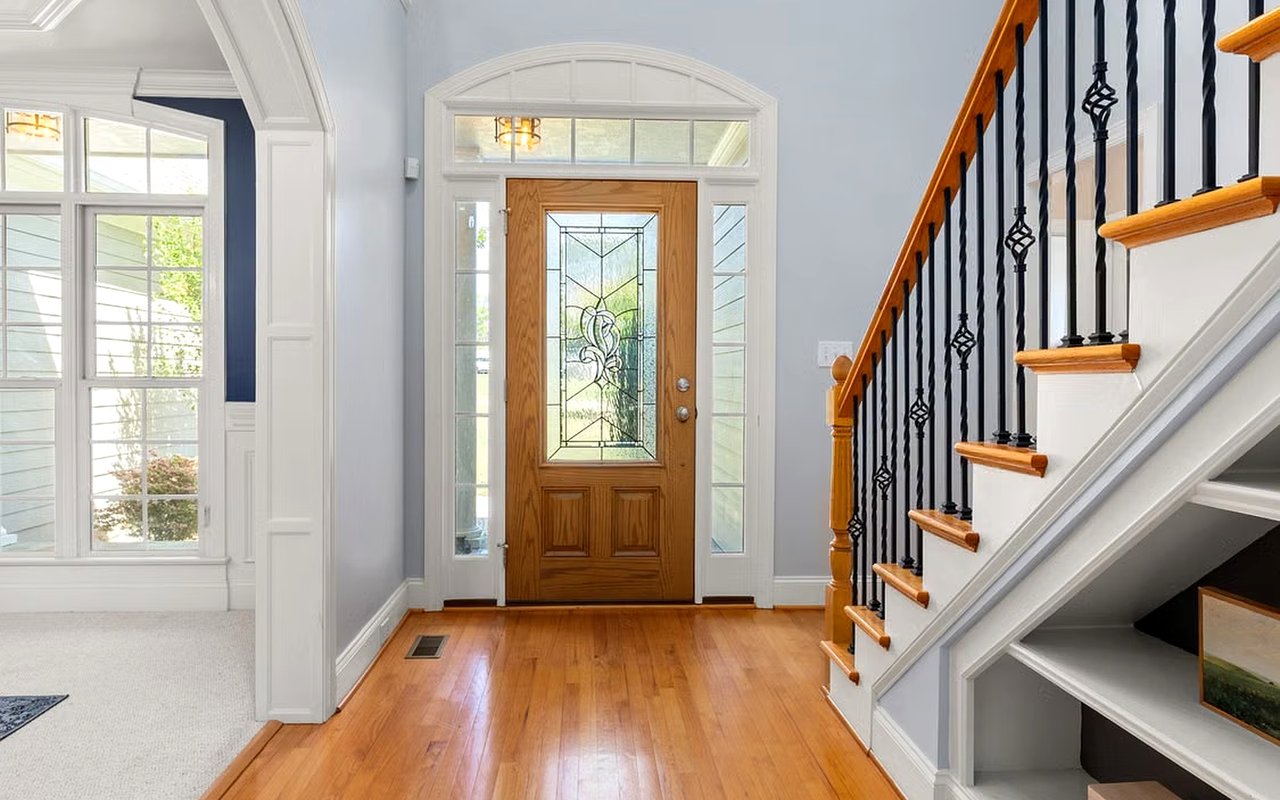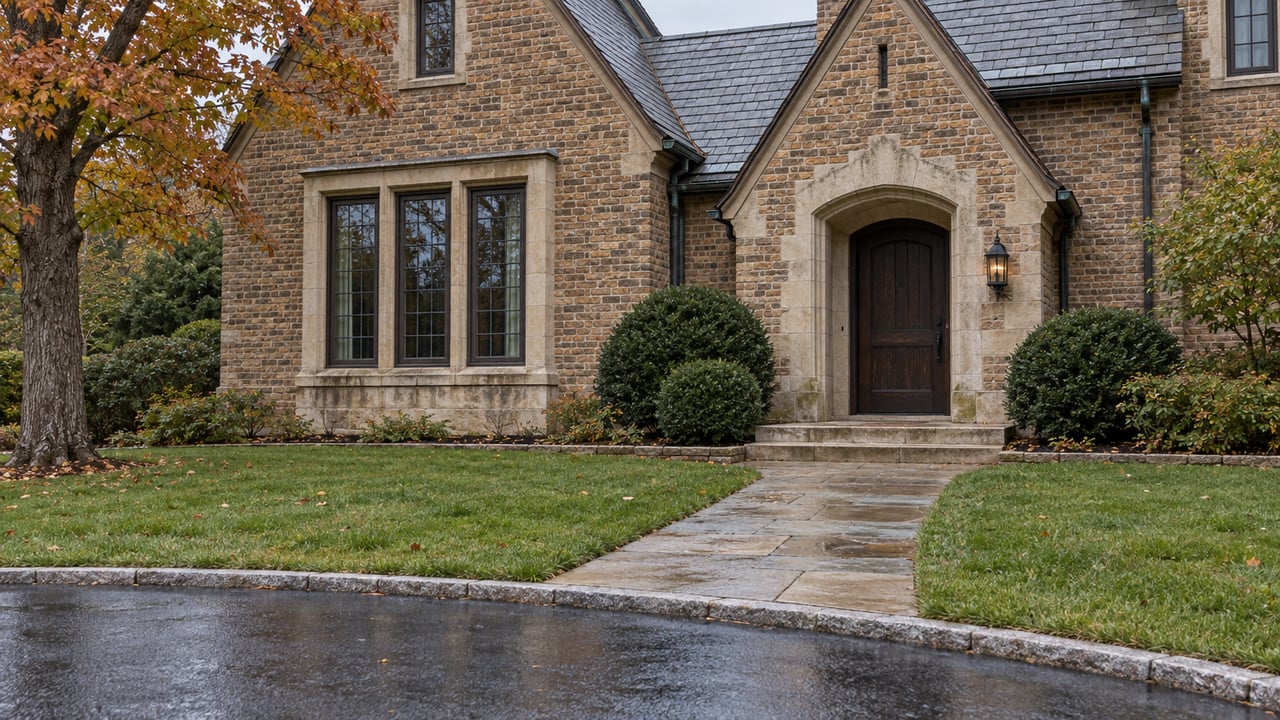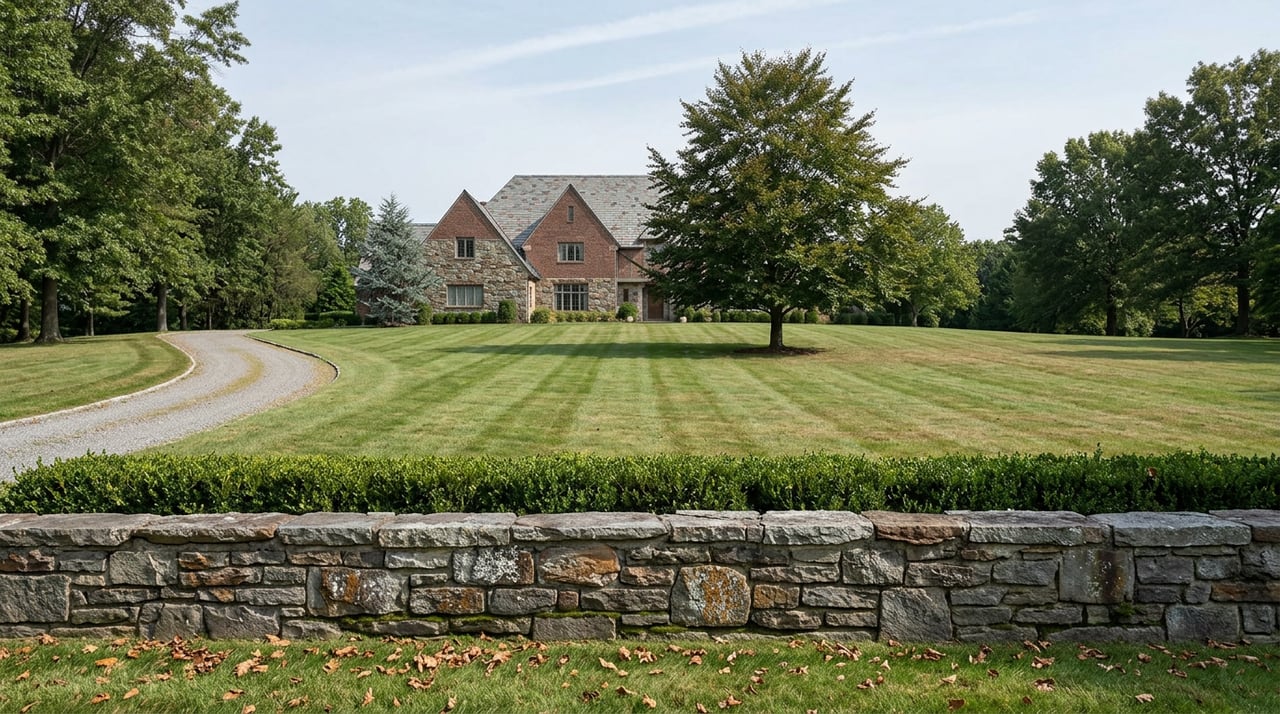
For most of the past two decades, one of the largest private residences in Ohio sat on the market and could not find a buyer. The house was not hidden or hard to reach. It carried a listing on the National Register of Historic Places, a pedigree tied to the Van Sweringen brothers who built Shaker Heights and Cleveland's Terminal Tower, and roughly 55,000 square feet of architecture that few buyers anywhere could match. The village's zoning code became central to an owner's later proposal to convert the property into six condominiums: it limits a dwelling to one family for each five acres of lot area.
That standard also provides context for the Roundwood Manor dispute and for buyers considering large lots or unusual houses in the village.
The Rule That Decided the Case
Hunting Valley's zoning code states plainly that no dwelling can be built or altered to house more than one family for each five acres of lot area. Owner Sylvia Korey ran into that rule directly when she asked the village's Planning and Zoning Commission for a special-use permit to convert Roundwood Manor into six luxury condominiums. The house sits on 7.69 acres. Chagrin Valley Today reported that six residences on that property would require 30 acres under the five-acre rule, more than four times what she owns.
The Commission denied the permit. Korey sued in 2018. Cuyahoga County Common Pleas Judge David Matia sided with the village. She appealed to the Eighth District Court of Appeals, which affirmed the denial of the permit itself but sent the case back for a hearing on whether the rule was unconstitutional as applied to her specific property. That hearing happened, the trial court ruled against her again, and the Eighth District affirmed a second time in December 2022. By early 2023, Korey had asked the Ohio Supreme Court to take the case, a request the court accepts only rarely. That is the last confirmed status of the litigation.
In an interview with Cleveland Magazine, Korey's attorney, Anthony Coyne, argued the rule itself was the problem, not the proposed use:
"That large lot zoning requirement with no exceptions is about as exclusionary of a land zoning as there is."
The dispute centered on whether the proposed six units could be permitted under the five-acre standard.
The Village's Position in the Case
Village officials cited the 1938 ordinance and argued that six units, even inside the existing walls with no new construction, would bring more traffic, lighting, and activity than the zoning code allows for that acreage. Historic preservation groups, including the National Trust for Historic Preservation, filed briefs on Korey's side. A homeowners' association attorney representing neighbors argued that the dispute concerned potential sale value, noting that Korey had once sought as much as $7.9 million after buying the property for $1.4 million.
The record also described other properties in Hunting Valley that do not meet the five-acre standard, including five rental apartments in Roundwood Manor's former garage. Chagrin Valley Today reported that village officials said many predate the 1938 code or were built under looser rules that existed before 2000. Those examples provided context for the dispute over whether the proposed conversion complied with the standard.
Property Values in the Case
A trustee for the Daisy Hill Association told the Commission that converting Roundwood Manor into condominiums could damage nearby property values. Korey's side cited a home in the Daisy Hill neighborhood, next to the manor's non-conforming rental apartments, that sold for $4 million.
The sale offered one point of comparison, while the village's position focused on its density standard. The case involved questions about both potential effects on property values and the application of the village's zoning rule.
By the time the case reached its most recent appeal, the Village of Hunting Valley had reported spending $289,420 in legal fees as of August 2020 and $357,135 by December 2021, not counting a separate $50,000 covered by the village's insurer.
What This Means If You're Comparing Suburbs
If you are weighing Hunting Valley against other Chagrin Valley communities, the acreage minimum is not a lifestyle detail like a golf course view or a wooded lot. It is a land-use standard worth understanding when evaluating a property's options.
That has real consequences for anyone shopping estate-scale property here. A buyer looking at a 15,000 or 20,000 square foot house on five or six acres should consider both the pool of buyers who want a house that size and the zoning limits on possible future uses. The zoning that protects Hunting Valley's rural character and its five-acre minimums, described in the village's own history, also shapes the options available for large or historically significant properties.
For sellers with unusually large or unusual homes in the village, the lesson runs the other direction. Pricing and positioning have to account for a buyer pool defined by the zoning code, not by comparable sales elsewhere in Greater Cleveland. A house this size in Pepper Pike or Moreland Hills, where lot minimums and land-use flexibility differ, faces a different set of buyers than the same house would in Hunting Valley. If you're weighing a purchase or a listing here, our Hunting Valley neighborhood guide covers what the village's land, conservation focus, and zoning approach typically mean day to day. The Roundwood Manor case shows what they mean when a property doesn't fit the standard mold.
A Few Questions Worth Asking Before You Buy
Does the five-acre rule apply to every lot in the village? The zoning code sets one dwelling per five acres as the standard for the village's single-family district. Some existing properties predate the 1938 ordinance or were built under rules that allowed accessory structures before 2000, which is why a handful of non-conforming uses still exist.
What should you consider before splitting a lot? The village's acreage standard is one factor to consider when evaluating a possible split.
Does this affect every home in Hunting Valley, or just large ones? The rule sets a floor, not a ceiling, so it mainly limits what can be done with land, not what a typical single-family home looks like. It becomes most relevant for oversized or historically significant properties where an owner might otherwise consider dividing the house or the land into multiple units.
Buying or selling in a village where zoning shapes what a property can become takes someone who has watched how that code plays out in practice. Adam Kaufman has spent decades working Hunting Valley and the surrounding Chagrin Valley suburbs, and knows which questions to ask when evaluating whether a five-acre lot fits your plans. Just Ask Adam.
This article is general information, not legal, tax or financial advice. Consult a qualified professional about your situation.